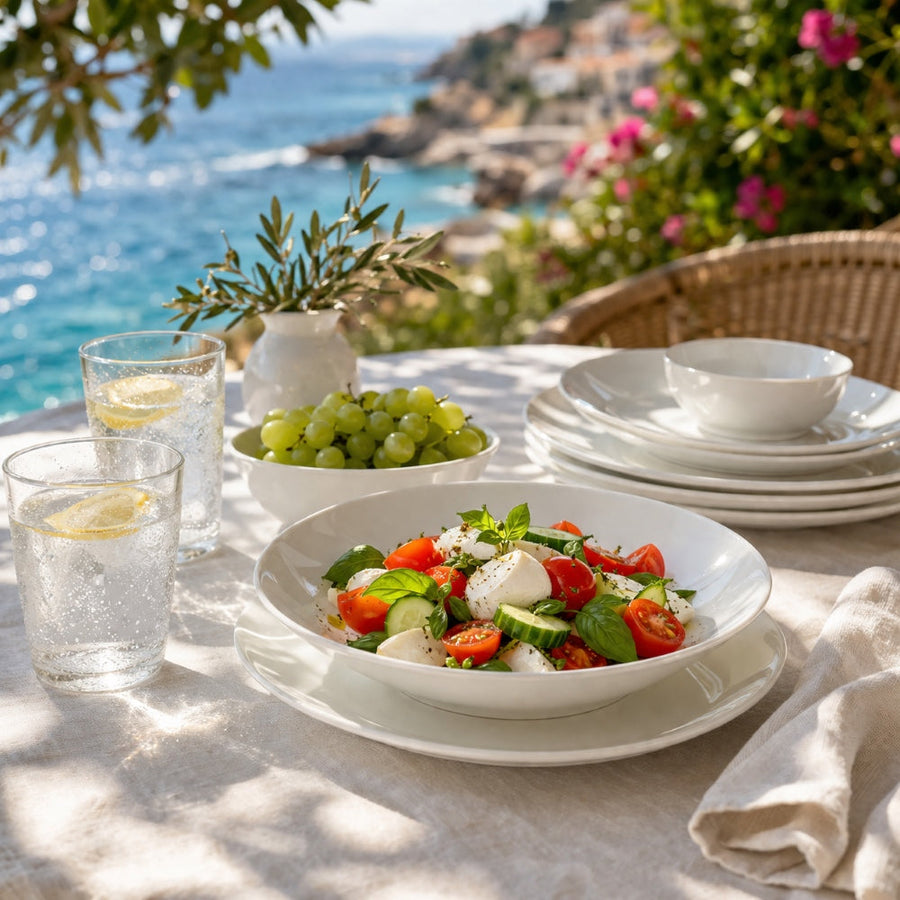
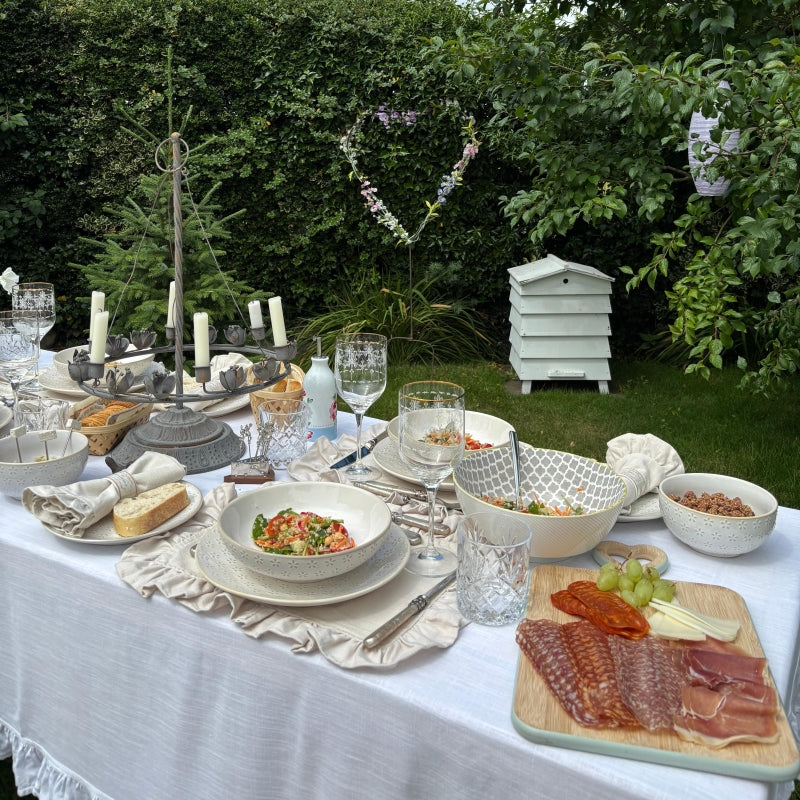
Style gray dinnerware with linens that distinguish the plates from the tabletop, then add one accent color through napkins or flowers. Ivory and natural wood create a warm everyday setting; white and silver give a crisper look; navy, burgundy, or olive add stronger color. Start by checking your plates beside the table under your usual dining lights. The shade of gray, its finish, and any pattern will help you decide which combination works best.

Check Your Gray Dinnerware Against the Tabletop
Gray ranges from pale silver to deep charcoal, with some shades appearing warmer and others more blue-toned. Place a white napkin beside a plate to make those differences easier to see. Compare it in daylight and under the lights you use for dinner before choosing linens.
On a dark wooden table, a pale placemat can outline a dark gray plate. On white or pale wood, a charcoal napkin or darker woven mat adds definition around lighter dinnerware. If the plate and tabletop are nearly the same shade, change the layer directly beneath the plate first.
Create contrast where the plate meets the table. You can keep the rest of the setting simple once that edge is clearly visible.
Choose a Color Combination You Can Repeat
Use the combinations below as starting points rather than fixed rules. Pick the look closest to your room and the linens or flatware you already own.
| Table Style | Gray Dinnerware | Linens | Flatware | Finishing Detail |
| Warm and relaxed | Warm gray or speckled gray | Oatmeal placemat with olive napkin | Brushed stainless steel | Wooden serving bowl |
| Light and crisp | Pale gray or marble gray | White tablecloth with slate-blue napkin | Polished stainless steel | Clear glasses and white flowers |
| Rich evening setting | Medium or charcoal gray | Ivory runner with burgundy napkin | Gold-toned flatware | Low floral arrangement |
| Modern contrast | Light gray with a plain or subtle pattern | Charcoal placemat with white napkin | Matte black flatware | Simple clear vase |
Repeat the napkin color in one small detail, such as a flower or place card. This connects each setting with the center of the table. For a softer result, use a muted accent; for stronger contrast, choose a deeper version of the same color.
Balance Marble Patterns, Speckles, and Plain Surfaces
Let one pattern lead the setting. Marble-look plates already provide movement across the surface, so plain napkins and a simple tablecloth make an easy pairing. With solid gray plates, a striped napkin or patterned runner can supply the detail instead.
Our Luna Marble Grey set combines a marble-look design with round, lipped porcelain pieces. Pair it with solid white linens and slate-blue napkins for a coordinated setting that keeps the plate pattern visible. Its 12 pieces include dinner plates, salad plates, and cereal bowls for four.
For a more textured everyday table, the Tara Grey set offers stoneware with a speckled glaze and matte clay-colored bases. Try it with an oatmeal placemat and an olive napkin. The fabric and wood tones complement its textured appearance without requiring another printed pattern.
Finish also affects the combination. Smooth glazed dishes can sit alongside softly woven linens, while ribbed glassware adds detail to a plainer setting. Add texture through a few existing pieces before buying several new decorative layers.

Arrange the Place Setting Around the Meal
Build one complete setting before repeating it around the table. Include the serving dishes you expect to use so decorations fit around the food from the beginning.
- Choose the lower layer. Use a tablecloth, placemat, or the bare tabletop. A placemat should extend beyond the plate and provide room for the arrangement you have planned.
- Set out the dishes for the menu. Start with the dinner plate or bowl. Add a smaller plate when you are serving a separate course, and bring dessert dishes out later if space is limited.
- Place the napkin, flatware, and glasses. Keep the arrangement consistent at each seat. A simple folded napkin beside the plate leaves a marble pattern or decorative rim visible.
- Position shared food before decorations. Leave reachable spaces for serving bowls, water, and bread, then use the remaining area for flowers or candles.
Keep centerpieces clear of guests’ sightlines so people seated opposite can see one another. Sit down at the finished setting to check the view and the space for your hands, glass, and plate.
For a round table, try one compact central arrangement. On a longer table, two or three small arrangements can leave useful gaps for serving dishes.

Change the Setting With the Season
Keep the dinnerware and everyday glasses in place, then change the napkins and one central decoration. This gives each season a recognizable look without requiring a second complete table setting.
For spring, try pale pink napkins with a few flowering stems. In summer, switch to blue-and-white striped napkins and a low bowl of lemons. With marble-gray plates, keep the stripes on the napkins and use plain placemats so the patterns stay separate.
In fall, rust napkins and a small group of gourds work with a natural runner. For winter gatherings, use deep green napkins and white flowers or a short arrangement of evergreen stems. Choose a decoration that fits the space left after setting out the meal.
Photograph a combination you like before clearing the table. Keeping a few reference photos makes it easier to recreate a seasonal setting with the pieces you already own.

Gray Dinnerware Styling and Care Questions
Q1. Can Gray Porcelain Dinnerware Be Used Every Day?
Yes. Porcelain dinnerware can suit everyday meals as well as entertaining. Choose the plate and bowl shapes you use regularly, and follow the care instructions for the exact pieces. Color does not determine microwave, dishwasher, or oven suitability; check each item’s approved uses.
Q2. Is Marble-Gray Dinnerware Made From Real Marble?
Our marble-gray porcelain dinnerware is porcelain with a marble-look design. The name describes its appearance, rather than identifying it as a stone plate. Follow its porcelain care instructions, and check the material separately when comparing similarly named products from different collections.
Q3. Can I Use Gray Dinnerware for a Wedding Reception?
Yes. Gray can work with white linens, colored napkins, and either silver- or gold-toned flatware. Before planning the full reception, assemble one sample setting with the venue’s linens and lighting. Confirm that the plate sizes and dish types suit the menu and service plan.
Q4. How Can I Photograph Food on Gray Plates?
Try soft daylight from beside a window and place the food against a plain background. Move the plate until reflections no longer obscure the food or pattern. Take a test photo before adding decorations, then include only the napkin, glass, or flatware needed to frame the meal.
Q5. Do I Need Gray Glassware to Match Gray Plates?
No. Clear glasses are an easy starting point because they leave the plate and napkin colors visible. Colored glassware can also work; use it as an accent and keep nearby linens simpler. Check the combination with drinks in the glasses, rather than comparing only empty pieces.