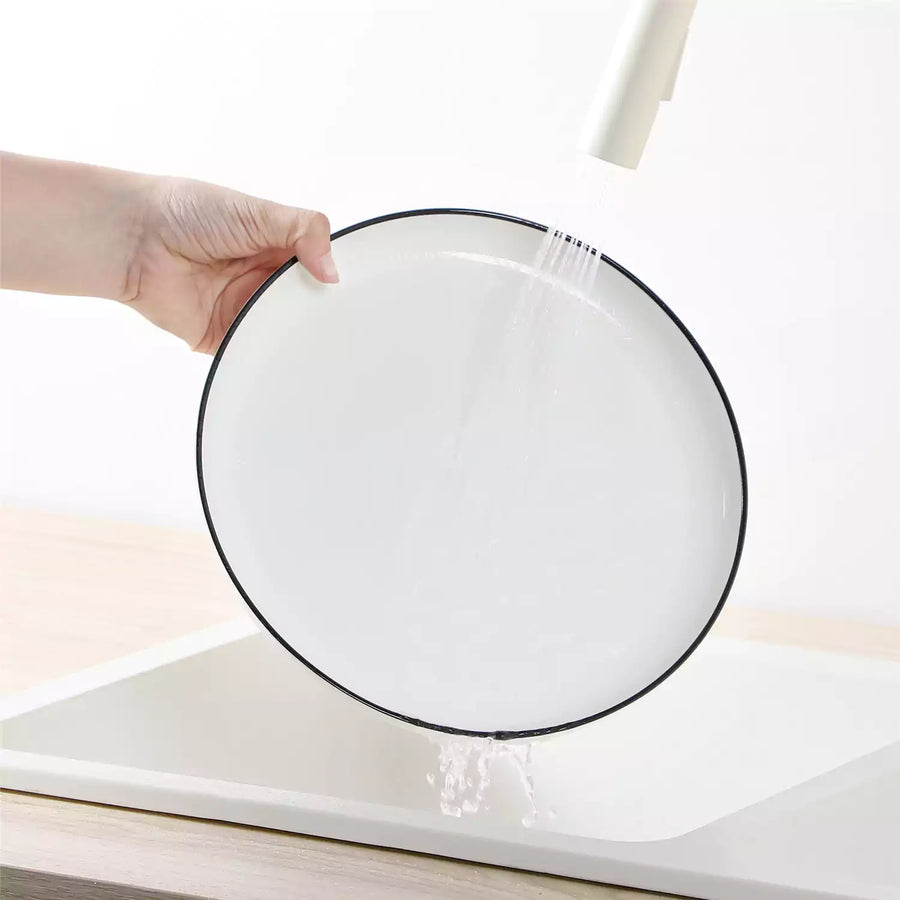
A warm platter can make a noticeable difference when food moves from the kitchen to the dining table. Instead of losing heat immediately against a cool serving surface, freshly prepared food can stay closer to its ideal serving temperature for longer. However, warming ceramic requires more care than simply placing a platter in a hot oven. Rapid temperature changes can cause stress in the ceramic and make it more likely to crack or break.
When you are cooking a roast, baked pasta, vegetables, or any other hot dish, you want to heat the dish slowly and safely. Always follow the manufacturer's instructions for the particular product before preheating plates or serving pieces. Even if two dishes seem alike, a ceramic serving platter might have different heat restrictions than other oven-safe dishes.
Why a Warm Platter Helps Some Foods at the Table
The primary function of a warm serving platter is to minimize the initial heat loss when plating and serving. If hot food is served on a cold surface, some of the heat will be transferred to the platter prior to serving.
A warm surface can minimize that initial temperature loss, making foods like roasted meats, baked casseroles, vegetables, and other hot foods more palatable when they are brought to the table. The purpose is not to keep food hot indefinitely or replace proper food-safety practices. Rather, warming the platter is a simple serving method that helps ease the transition from kitchen to table. It can be especially useful for meals where presentation and serving temperature both matter, but it should always be balanced with safe handling of the ceramic itself.

Verify the Platter's Heat and Appliance Instructions
Do not assume that every ceramic serving platter is safe for use in an oven, microwave, or warming appliance. There are many variations in materials, construction, glaze, thickness, and manufacturing specifications of ceramic products.
Read the product instructions before selecting a method of warming, and check for particular information on oven use, microwave use, maximum temperatures, and temperature changes.
Don't assume that all ceramic items in your kitchen are oven-safe. A platter designed for serving may have different instructions from a baking dish intended for direct oven use. If the manufacturer does not approve a particular warming method, choose another method that is specifically supported rather than experimenting with heat.
Choose a Gradual Warming Method
When the manufacturer permits warming, choose a gradual method. Warm water can heat the platter gradually without exposing it to direct heat. If the product instructions allow this method, use comfortably warm water rather than extremely hot water, then dry the platter thoroughly before serving.
A dedicated plate warmer may also be suitable when the platter's instructions permit its use and the warmer operates within the recommended temperature range. Low oven warming can work for products specifically approved for oven use, but the temperature should remain within the manufacturer's stated limits. When using serving platters, be sure to read the care and use instructions for the specific platter before warming.
Avoid Abrupt Temperature Changes
One of the primary concerns when heating ceramic is thermal shock. If a cold platter is suddenly exposed to high temperatures, it may expand unevenly, causing stress to the material. The reverse situation can also be problematic.
Transferring a very hot platter to a cold, wet or otherwise temperature-sensitive surface can result in another fast temperature change. This is why thermal-shock precautions matter even when you are using ceramic serving pieces.
Do not put a refrigerated or very cold platter in a hot oven unless the manufacturer has indicated that the platter is suitable for this purpose. Likewise, do not place a hot platter on a cold countertop or expose it to cold water. Allow the piece to heat and cool gradually rather than changing its temperature rapidly.

Dry the Surface Before Adding Food
When using warm water as a part of the warming process, the platter should be dry before food is placed on it. A thin layer of water can dilute sauces, impact presentation or cause food to slide across the surface. Moisture can also come into unexpected contact with hot fats, oils, or sauces, which can cause splattering.
Once warmed, gently pat the platter dry with a clean towel and ensure that no water remains on its surface. Drying is particularly important around textured areas, rims, and recessed designs where moisture may collect. A dry platter provides a cleaner surface for plating and makes the transition from warming to serving safer and more controlled.
Handle the Platter as a Hot Serving Piece
Even if the platter does not initially feel very hot, treat it as a hot kitchen item once it has been warmed. When necessary, use proper oven mitts or heat-resistant gloves. Prepare a heat-safe resting area before taking it out of the warming appliance.
Do not place a hot ceramic piece directly on an unprotected wooden, plastic, stone, glass, or laminate surface unless the manufacturer or surface-care instructions say it is safe. Clear the path from the kitchen to the dining table before carrying the platter. Use both hands and take your time if the platter is large or heavy. Dinner service should be easier, not more difficult, with a warm serving platter.
Coordinate Warming with Plating and Guest Arrival
Timing matters because there is little benefit in warming a platter far earlier than necessary. Ideally, warm the platter just before the food is ready to go out of the kitchen. If using warm water, begin the warming step while the final dishes are being finished.
When using an approved plate warmer or low oven, follow the product instructions for warming, and do not leave the empty platter heated for an unnecessary amount of time. Once the platter reaches the appropriate temperature, dry it if necessary, transfer the food, and serve promptly. This brief sequence helps limit the time the ceramic remains warm and keeps kitchen-to-table service organized.
Concluding Thoughts
A warm serving platter can help reduce heat loss and make hot dishes more inviting at the table, but gradual warming is essential for protecting ceramic from thermal shock. Always follow the manufacturer's care instructions, avoid sudden temperature changes, and handle the platter carefully once warmed. If you're looking for practical pieces for everyday meals or special occasions, explore the MALACASA serving platter collection for options designed to complement your tableware.

Ceramic Platter Warming FAQs
Q1: Can I Put a Ceramic Serving Platter in the Oven to Warm It?
Only if the manufacturer clearly indicates the platter is oven-safe and offers temperature recommendations. Not everything that is ceramic is oven-safe.
Q2: Can I Warm a Ceramic Platter in the Microwave?
Microwave suitability varies by product. Please refer to the manufacturer's instructions before using this method, especially for platters that are decorated with metal, have unusual construction, or other restrictions.
Q3: Is Warm Water a Safe Way to Warm a Platter?
When the product's care instructions permit it, warm water provides gradual warming. Use comfortably warm water, not extremely hot water, and dry the platter thoroughly before placing food on it.
Q4: Can I Put a Warm Platter on a Cold Countertop?
Try to prevent sudden temperature fluctuations. A suitable resting surface helps the heated ceramic piece transition more gradually.
Q5: Which Foods Benefit From a Warm Platter?
Foods that are better served hot, like roasted meats, baked pasta, casseroles, vegetables, and some rice or grain dishes, may benefit most because a warm surface will help minimize heat loss right after serving.